
By Kolby LaMarche
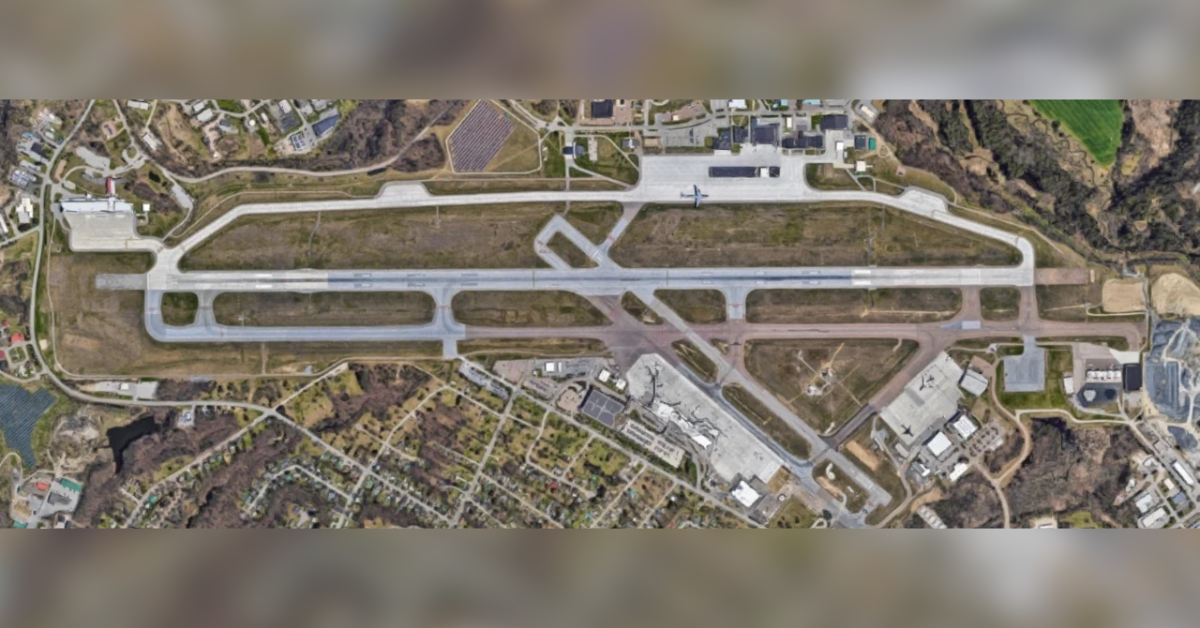
A new economic impact assessment shows that Patrick Leahy Burlington International Airport (BTV) continues to serve as a major driver for northwest Vermont’s economy, generating more than $1 billion in annual economic activity and supporting thousands of jobs across the region.
The study, prepared by R.A. Wiedemann & Associates, Inc., updates a similar analysis from 2018 and quantifies the airport’s contributions through direct operations, visitor spending, capital projects, and military activity.
The report estimates BTV’s total regional economic output sits at around $1.07 billion dollars, up significantly from $481 million in the prior study just years ago.
The airport supports 5,646 jobs statewide and regionally, including direct, indirect, and induced employment. This marks an increase from the 4,935 jobs reported in earlier assessments.
Labor income tied to airport activity totals $325.4 million annually.
“BTV anchors business travel, tourism, emergency access, and military readiness for northwest Vermont and adjacent markets,” the report said.
As Vermont’s primary commercial airport and a joint-use facility with the Vermont Air National Guard, the airport handles scheduled service from carriers including American, Delta, United, Breeze, and Sun Country, connecting to hubs like New York, Chicago, and seasonal leisure spots, opportunities which the airport has been looking to expand for sometime.
On-airport employment stands at around 1,280 positions. This includes air carriers, fixed-base operators, concessions, maintenance, federal agencies like TSA, and airport administration.
Military operations at the 158th Fighter Wing (F-35A) and Army Aviation Support Facility add to the on-field presence, though they represent a smaller share of total movements.
Visitor spending plays a key role, tied largely to our state’s tourism sector, which saw 15.8 million visitors and $4 billion in outlays in 2023.
A standout feature is the growth of emerging aerospace activity.
BETA Technologies operates a 178,000-square-foot production facility on the airport campus, commissioned in 2023. The plant enables final assembly of the all-electric ALIA aircraft, with the first Vermont-built plane completing a flight in late 2024.
This positions BTV as a hub for clean-technology and aerospace innovation, enhancing manufacturing jobs and regional clustering, BETA has argued. The company, founded in 2017, went public last year and has faced some hurdles since.
Capital spending further bolsters impacts, with ongoing projects contributing to construction employment and infrastructure improvements. The report detailed direct on-airport expenditures, including capital costs, at $687.5 million.
State and local taxes generated by airport-related activity reach an estimated $62.5 million. These revenues stem from businesses, households, and visitor outlays supported by BTV, according to the report.
Beyond annual flows, the study assessed the airport’s asset value as public infrastructure.
Replacement value of facilities, including runways, taxiways, terminal, and joint-use assets, is substantial, with depreciated current value placed at $808 million — up from $562 million in 2018.
Combined with annual output, the overall airport regional value approaches $1.88 billion, about an 80 percent increase since the last assessment.
Airport officials note that only about 50-60 positions are direct city employees managing the facility. The Air Guard employs about 456 full-time staff for their operation, and 91 full-time staff for the Army National Guard, with an annual payroll exceeding $60 million. Infrastructure upgrades and related spending add tens of millions more.
In addition to the economic impact study, the airport also released a recent marketing study, focused on BTV connecting flights to major destinations. The airport’s nonstop service to Denver International Airport (DEN) continued to perform strongly in 2024, capturing a significant share of the market, according to the report.
According to DiioMi market data analyzed for 2024, United Airlines held 43% of the passenger share on the BTV-DEN route. That travel corridor recorded 11,513 passengers going from Burlington to Denver and 11,087 in the reverse direction, for a combined total of more than 22,600 passengers over the year.
The route provides critical year-round connectivity between the Green Mountains and the Rocky Mountain West. This high-traffic is good for passengers; in times past, airlines who have performed poorly at BTV have either down-sized or cut completely direct or connecting flights.
Leave a Reply