
By Kolby R. LaMarche
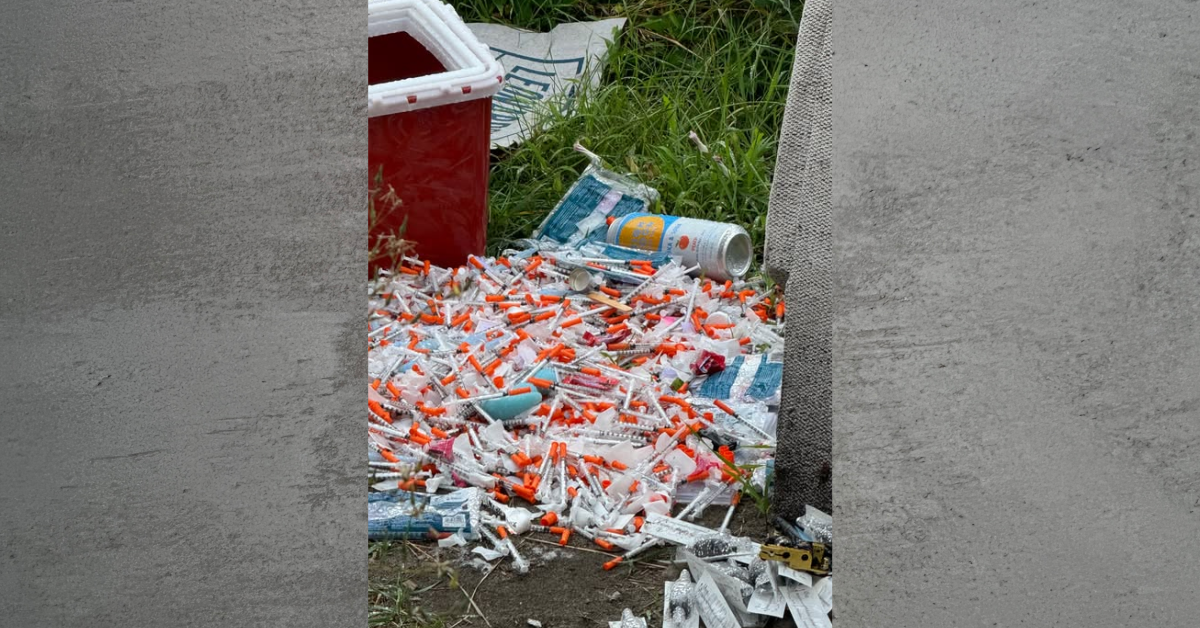
Burlington’s Community Development and Neighborhood Revitalization Committee is set to review a 19-page report tomorrow, outlining recommendations to address syringe litter in the city. The report was prepared by Councilors Evan Litwin and Allie Schachter.
The report follows a City Council resolution from October of last year, which tasked the Board of Health with evaluating syringe exchange programs and their environmental impact.
The Board presented its findings on May 12. The Council then assigned CDNR to review them and make recommendations for the end of this year.
The committee invited Vermont Cares (VC), Vermonters for Criminal Justice Reform (VTCJR), and the Howard Center—all organizations that provide syringes. However, VC and VTCJR did not respond to the invitations.
The report focuses solely on data from the Howard Center, the only needle-exchange organization to participate in the committee’s work.
In 2024, the Howard Center dispensed 944,109 syringes and received 516,335 back, for a return rate of 55 percent. That left some 427,774 syringes unaccounted for.
Howard Center data shows: In 2023, 601,400 syringes were dispensed and 240,817 returned, for 40 percent. For January through August 2025, 457,638 were dispensed and 371,381 returned, for 81 percent.
One week after CDNR’s final public meeting on September 17, a child at a South Burlington elementary school was stuck by a syringe found in a tree on the playground. The school said the needle was likely thrown over a fence from a nearby McDonald’s parking lot. The school had reported similar issues before.
CDNR reviewed Howard Center quarterly grant reports, grant agreements, and the Department of Health’s syringe service program operating guidelines.

Public meetings identified three main themes:
First, syringe programs reduce disease transmission and provide treatment pathways, but discarded syringes create public health and safety issues and challenges for people in recovery.
Second, current data tracking does not capture the full extent of syringe litter.
SeeClickFix received 800 to 1,000 syringe reports each of the past three years but does not record the number of syringes per report. Many cleanups by volunteers, businesses, and schools go unreported. The Board of Health said most users dispose of syringes properly, based on Howard Center interviews.
Third, cleanups depend on volunteers without central coordination, safety training, or protective equipment. Groups involved include the Peace and Justice Center, Greater Burlington YMCA, and a Sunday morning volunteer team. Theresa Vezina, the city’s Special Assistant on Overdose Prevention Center Implementation, has reportedly started coordinating these efforts with Howard Center.
From there, the group crafted recommendations for the city:
- CDNR recommends convening stakeholders to define citywide principles that include users, children, and people in recovery. It calls for state agency involvement and attaching notices to syringe transactions about risks of improper disposal.
- It also recommends a Department of Health audit of needlestick costs to employers, individuals, and insurers, with results sent to the Council.
- It calls for a Department of Health system to report needlesticks by the public, employers, and UVM Medical Center.
- On collection sites, CDNR recommends a report in six months on new disposal boxes placed in hotspots by the Board of Health.
- It supports expanding receptacles in hotspots and piloting boxes at downtown businesses but says not to expand further until the report is reviewed.
- On cleanups, CDNR recommends city support for Vezina’s coordination of volunteer groups, including modest funding for training and equipment.
- It calls for volunteers to report syringes collected and locations after each shift.
- It recommends transitioning coordination to the Agency of Human Services field representative and Department of Health, then to syringe programs.
- On hotspots, CDNR recommends Public Works and Parks Recreation and Waterfront identify and clean abandoned campsites and waste sites with syringes near schools, parks, waterfront, and bike paths before winter. It calls for more Burlington Police enforcement of drug dealing near Clarke Street.
- On syringe program oversight, CDNR recommends requiring Burlington programs to activate advisory committees with Agency of Human Services support, per 2012 and 2025 guidelines. Howard Center leadership agreed in September.
- CDNR recommends audits of high single-visit syringe provisions for rule violations, which require person-to-person exchanges. It notes reports of bulk syringe resales and non-local users returning 5,000 at a time.
- It calls for investigating low referrals and setting improvement plans with Turning Point. Howard Center questioned its own referral data in September but has not provided updates requested by September 25.
- CDNR recommends twice-yearly reports to the Council on key indicators and making syringe counts public in quarterly reports. By Spring 2026, it calls for legally requiring cleanup plans from Burlington programs, funded by the Department of Health with return incentives like gift cards.
- On Overdose Prevention Center integration, CDNR recommends co-locating syringe services there and converting 45 Clarke Street to recovery housing with federal funding support from CEDO.
Expected outcomes by 2026 include 100 percent report compliance, 90 percent syringe returns, doubled referrals, and halved complaints. Costs would use state and federal funds.
The Council is expected to vote on a motion to approve the recommendations and direct the Agency of Human Services field representative to implement them starting this year.

Leave a Reply