
By Kolby LaMarche
A private educational meeting at Rock Point last week drew an unexpected group of visitors, escalating into a physical confrontation that left a state lawmaker shoved and one person arrested on a simple assault charge.
The gathering, hosted by state Rep. Troy Headrick of Burlington, brought together members of the Odanak First Nation from Quebec, University of Vermont historians, and students for a presentation on Abenaki heritage.
Organizers intended the closed session to examine what they describe as a flawed process by which Vermont granted state recognition to four Abenaki groups more than a decade earlier.
Details of the meeting leaked, according to Headrick, and several people identifying themselves as members of the Abenaki Nation of Missisquoi arrived uninvited.
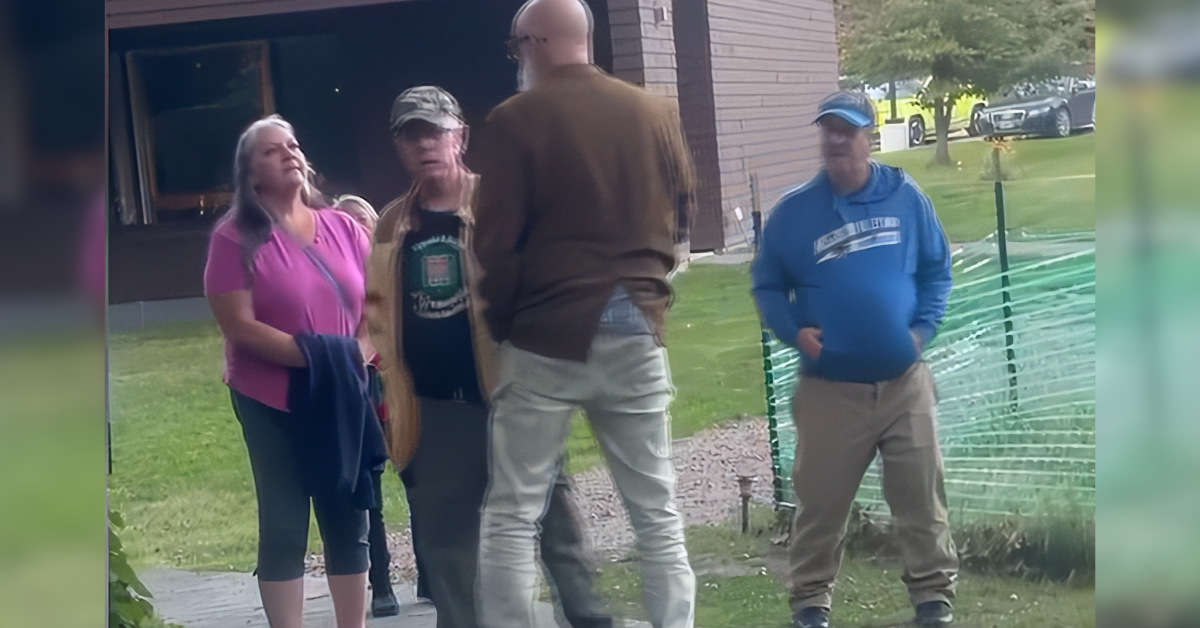
Headrick stepped outside to inform the arrivals that they could not enter. One of them, identified in subsequent accounts as Robert Richard, allegedly pushed him.
Headrick described the contact as a significant shove that knocked him backward, accompanied by verbal threats. Another person filmed the exchange.
Burlington police responded, escorted people from the property, and later arrested Richard. He was released and now faces a court date in November.
Jacques T. Watso, a councilor with the Abenaki Council of Odanak, called the episode part of “a pattern of intimidation that has gone on for far too long.” In a prepared statement, he said members and allies must be able to gather in Vermont without threats or assault.
Vermont Allies to the Abenaki First Nation at Odanak sent a letter to the Vermont Commission on Native American Affairs urging it to condemn the violence and address the incident at a public meeting.
The scuffle was brief. The underlying conflict is not.
For years, leaders of the Odanak First Nation and its sister community, Wôlinak First Nation, both federally recognized in Canada, have contested the legitimacy of Vermont’s four state-recognized Abenaki groups: the Abenaki Nation of Missisquoi, the Nulhegan Band of the Coosuk Abenaki Nation, the Koasek Traditional Band of the Koas Abenaki Nation, and the Elnu Abenaki Tribe.
Those groups received formal state recognition in 2011 and 2012 through a legislative process that required demonstration of kinship, ancestry, and continuity. Recognition brought tangible benefits, including permanent free hunting and fishing licenses issued by the state.
Odanak leaders maintain that the process excluded the communities with continuous documented ties to the Western Abenaki people whose historic territory included what is now Vermont, New Hampshire, and southern Quebec.
They argue that after colonial wars, disease, and pressure, many Abenaki relocated north of the border, and that true descent runs through the Quebec communities.
In their view, Vermont’s recognition conferred official status on groups whose members cannot demonstrate continuous Abenaki ancestry or, even, olitical community.
In October 2025, Odanak and Wôlinak released a lengthy genealogical report examining public records spanning roughly 15 generations for several prominent figures associated with the Vermont and New Hampshire groups.
The analysis concluded that the individuals studied were overwhelmingly of European ancestry, with any distant Indigenous ancestors neither Abenaki nor recent enough to support contemporary tribal claims.
Odanak representatives described the findings as confirmation of long-standing concerns about identity appropriation. They have framed the issue as a matter of sovereignty: the right of a people to define its own membership and protect its history from what they call erasure.
Vermont’s recognized groups reject those conclusions.
Their leaders have described the genealogical work as biased, reliant on colonial-era documents that undercounted or misidentified Indigenous people, and driven by motives they question.
They point to oral family histories, community continuity in Vermont, and the formal criteria they met under state law.
In joint statements, chiefs of the four groups have called the Canadian First Nations’ efforts an attack on their existence and rights. They note that one of the Vermont groups, Missisquoi, previously sought federal recognition in the United States and was denied, in part because federal examiners found limited documented descent from historic Abenaki ancestors.
The dispute has spilled into classrooms, museums, city halls, dinner tables, and the Statehouse.
Headrick has introduced legislation that would require schools and educational institutions to consult with and obtain endorsement from Odanak and Wôlinak before presenting materials on the Indigenous history of the land now called Vermont.
He has also sponsored a measure to create a task force to review the validity of the earlier state recognition decisions. Neither bill has advanced far. Headrick has said the original process stepped into territory that properly belonged to the sovereign nation with the clearest historical claim.
For people on both sides, the stakes feel existential, emotional, and all too personal.
Odanak leaders describe a deep wound, the appropriation of a history marked by displacement and survival, and the legitimization of claims that, in their account, dilute their ability to speak for their ancestors and manage resources tied to traditional territory.
Vermont group members, conversely, describe a different injury, the questioning of identities they have lived with for generations and the sense that outsiders are seeking to erase communities that have persisted in place.
Leave a Reply