
By Kolby LaMarche
In a moment of unity not seen in quite a while in Burlington, the city council on Monday approved a 10-point resolution calling on Gov. Phil Scott and state agencies for expanded help addressing homelessness, public drug use, mental health needs, and related public safety challenges in Vermont’s largest city.
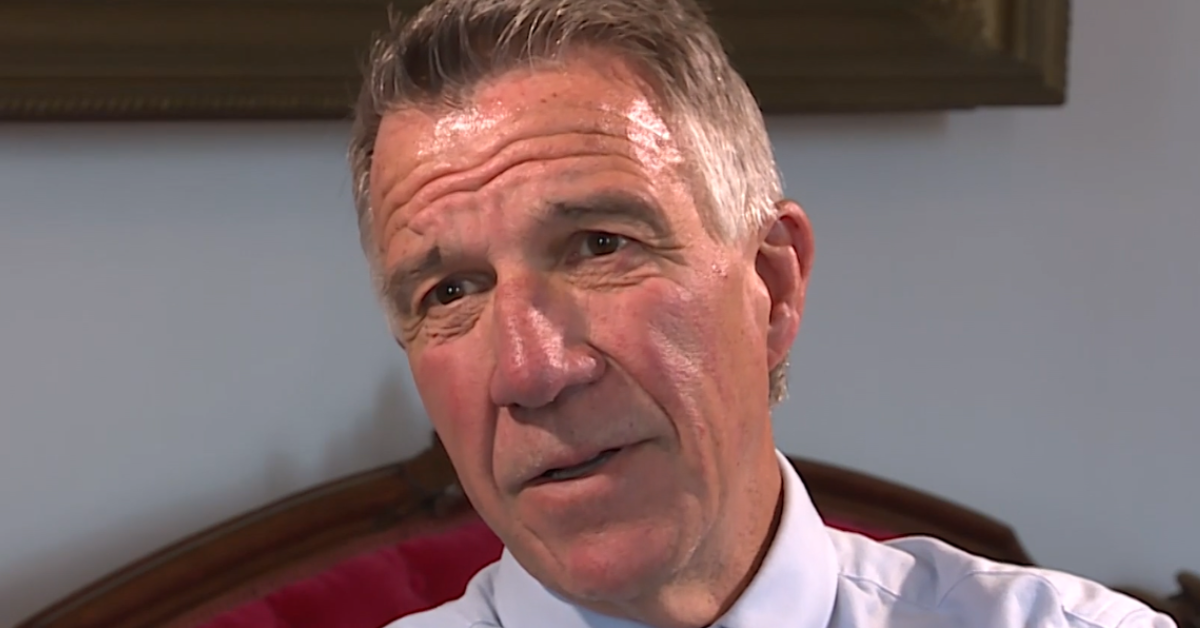
Gov. Phil Scott wasted little time responding. At a Tuesday press conference, after what he described as only a brief scan of the document, the Republican governor said he was “disappointed” with what councilors had put before him.
“We’ve done a lot for Burlington,” Scott said, “and if I was sitting in Newport, I might wonder what more can we do for one of the most affluent parts of the state when there’s suffering in other areas as well.”
He noted that other, less affluent regions of Vermont also face significant challenges and implied that concentrated additional resources for Burlington could raise equity concerns among residents elsewhere.
Burlington councilors, though, have taken a much different view on where the state’s “problems” lie. Many, both Democrat and Progressive, in Burlington have long said the support is needed because the city so often shoulders much of the burden, due to services and supports being heavily concreted in the Queen City.
At one point in the past year, Democrat Councilor Mark Barlow issued a concern during debate that Burlington’s ever-expanding pool of services may, in-fact, draw others from more rural corners of Vermont and even other states – a fact the governor’s office is likely aware of.
Scott emphasized that his administration has already invested substantial time and resources in the Queen City. He pointed to prior collaborations, including temporary Vermont State Police patrols ordered earlier in the summer ahead of a regional governors’ conference, a short-term action plan rolled out in late 2025 that directed state resources toward social services, judicial processes, and policing for roughly three months, and ongoing work by the Agency of Human Services.
Officials in his administration have previously credited those efforts with positive results, though city leaders have said the earlier plan largely omitted a direct focus on expanding shelter capacity.
On Wednesday, speaking in Bradford, Scott sharpened his critique of one of the resolution’s centerpiece requests.
He called a single 100-bed low-barrier emergency shelter a “bad idea.” “They know their community; they are going to need a building. They are going to need to have zoning changes to do that,” Scott said.
“I think, myself, a 100-unit in one location is a bad idea, but having 100 available beds is a good idea.”
He expressed a clear preference for a dispersed model of smaller shelters spread across Chittenden County rather than concentrating capacity in one large facility.
Scott said the Agency of Human Services has been working with the city on homelessness issues and will continue to do so, but he framed the large shelter request as surprising within what he characterized as a “list of demands.”
The governor signaled he would review the full resolution more carefully.
No meeting date between Scott and city officials, including Mulvaney-Stanak, has been publicly set, though the mayor has indicated hope for discussions around Labor Day.
Scott’s office has long maintained that the state is open to partnership when communities make specific requests, while also stressing that local policies and enforcement decisions play a major role in current conditions.
His policy director, Jason Malucci, reiterated before the council vote that the governor is willing to discuss support for Vermont communities but that “it is also important for communities like Burlington to evaluate policies that they have implemented that have contributed to the current climate.”
Beyond the shelter, the resolution seeks state help on a very wide range of issues: sustaining and expanding daytime resource centers for unhoused residents, expedited processes for municipalities carrying disproportionate shares of the unhoused population, four additional inpatient beds and three staff positions at a Department of Mental Health facility (widely understood to reference capacity issues at the Vermont Psychiatric Care Hospital in Berlin), deeper collaboration with the Department of Health on harm-reduction programs including syringe services, expanded capacity in Chittenden County’s treatment court docket to address recidivism through social services paired with court processes, prevention efforts aimed at keeping juveniles away from drugs and firearms, and coordinated state police support for retail theft, drug trafficking, and traffic enforcement as Burlington works to rebuild its own police ranks.
City leaders frame these as short-term, actionable, time-limited steps that fill gaps left by earlier state interventions.
Whether the state will deliver on specific items remains unclear, especially given Scott’s recent remarks.
Scott has already voiced opposition to concentrating 100 beds in one location and raised questions about resource equity across Vermont. The Agency of Human Services is already engaged on homelessness, which could facilitate site identification or staffing support for smaller-scale options, but large capital or operational commitments for a single major shelter appear less likely given the governor’s stated preference.
Additional mental health inpatient capacity faces its own constraints after recent staff and bed reductions at state facilities.
Expanded treatment court resources and judicial support align more closely with the collaborative model Scott previously backed.
Coordinated VSP assistance on targeted enforcement has historical precedent—Scott provided troopers under a prior mayor—but recent temporary patrols have concluded, and any return would likely depend on clear local requests and demonstrated partnership on enforcement priorities.
Syringe service program support and daytime resource center funding would require health and human services agencies to deepen existing partnerships; the administration has not signaled opposition but has also not committed new resources.
Hotel-motel program adjustments, referenced in related discussions, remain politically sensitive after earlier phase-downs that saw increases in public exposure to the state’s very real homelessness crisis.
Overall, Scott’s responses have suggested the state is more inclined toward continued technical assistance, targeted enforcement collaboration, and dispersed shelter capacity than toward fully underwriting the city’s most ambitious single-facility request or open-ended resource transfers.
More updates are likely to come, not just from Scott’s office but how Mayor Emma Mulvaney-Stanak may respond to the governor’s push-back.
Leave a Reply