
By Kolby LaMarche
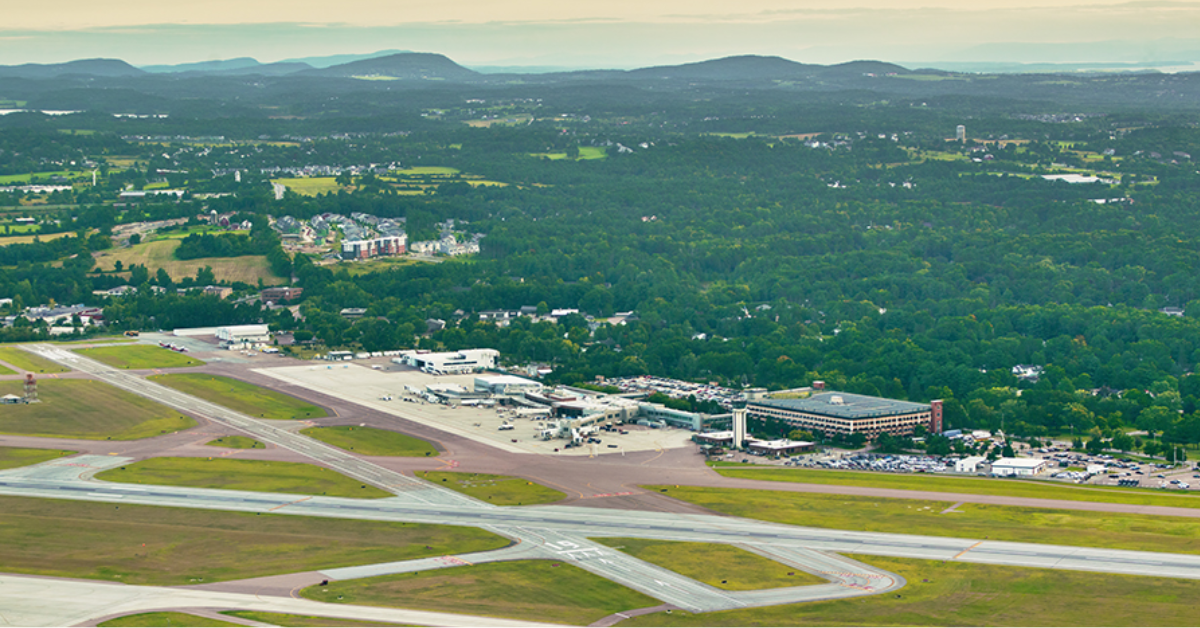
Noise complaints at Patrick Leahy Burlington International Airport have fallen dramatically from the intense public outcry that greeted the arrival of the Vermont Air National Guard’s F-35A Lightning II fighters in 2019, according to data presented to the Airport Commission last night.
The latest report, covering June 1, 2021, through July 31, 2026, logged a total 845 comments. Military aircraft accounted for 544 of them, or 64 percent of total submissions.
Most interesting, just 95 people generated every comment in the dataset.
5 individuals alone produced 593 comments, or 71% of the total comments submitted.
63 people, or 66% of commenters, filed only once.
9 entries were airport staff tests, the airport said. Burlington submitted 388 comments, Winooski 155, Colchester 118, South Burlington 46, and Williston 23.
Monthly figures show a clear decline after much earlier peaks, with many recent months registering only single-digit or low double-digit reports. It should be noted, however, that the military aircraft, in recent years, have seen heightened deployment, away from their home base.
At present, based on as accurate a count as one can get, 8 F-35s remain currently in Vermont, whereas the other 12 are deployed elsewhere, mainly in the Middle East.
That quiet stands in sharp contrast to the uproar that accompanied the jets’ arrival.
The first two F-35As touched down in September 2019, making Vermont the first Air National Guard unit to operate the aircraft. The transition from the older F-16s had been contentious for years.
In 2018, Burlington voters approved a non-binding resolution calling for the basing decision to be reversed. City councils in Burlington, South Burlington, and Winooski voiced strong opposition.
Residents packed public meetings, citing projected noise maps that showed the number of homes exposed to average day-night sound levels above 65 decibels nearly tripling—from roughly 819 in 2015 to an estimated 2,640 by 2023—and affecting more than 6,000 people, especially in Winooski and Williston.
When the jets began flying, the reaction was immediate and visceral.
Early Guard records showed relatively few formal complaints in the first weeks—14 from eight people after more than 20 missions—but the volume climbed rapidly.
By the end of 2020, the Guard had logged 991 complaints from 312 callers. April 2020 alone brought 134 complaints from 83 people; September 2020 peaked at 245 from 100 callers.
Residents described walls shaking, windows rattling, conversations stopping mid-sentence, children covering their ears, and sleep interrupted.
Some even reported panic attacks and ringing in their ears. Decibel readings from takeoffs regularly exceeded 100 and reached as high as 115, levels the Federal Aviation Administration considers incompatible with residential areas for prolonged exposure.
The intensity of that early opposition shaped the years that followed. Community groups organized, newsletters circulated, and municipal leaders continued to press Vermont’s congressional delegation.
In 2024, the city councils of Burlington, South Burlington, and Winooski passed formal resolutions urging a change in the 158th Fighter Wing’s mission to one less disruptive to surrounding communities.
Airport and Guard officials responded with updated noise exposure maps, residential sound-insulation programs, and studies of operational changes such as modified afterburner use on takeoff to gain altitude faster and reduce ground-level noise.
Those maps, revised with actual flight data rather than pre-arrival projections, showed a smaller impact zone than forecast.
The contraction resulted largely from lower operational tempo, not quieter engines. The airport’s sound-insulation program, launched in 2022, has completed work on dozens of eligible homes and continues through successive phases, though eligibility remains limited by construction dates and current contour lines.
Deployments accelerated the reduction in local flying. In early 2025 the unit sent aircraft to Kadena Air Base in Japan.
Later that year a larger contingent deployed to the Caribbean.
Early this year, jets and personnel shifted toward the Middle East. A Guard spokesman confirmed in spring 2026 that the majority of the fleet had been away since mid-December 2025, with only limited training flights—mostly Tuesdays and Thursdays—continuing from Burlington.
“Flights aren’t as consistent as they once were when everyone was home and we were flying typically five days a week,” the spokesman said. “There are a lot fewer flights.”
University of Vermont mathematics and statistics professor Richard Single opened an online survey in mid-April 2026 to measure how often F-35 noise interferes with daily life—relaxation, conversation, concentration, outdoor activity, and the need to close windows or pause work.
By early May it had received about 2,000 responses. Single, who has described pausing university classes when jets pass overhead, plans to release findings later in 2026 and is preparing a related physiological study using wearable devices.


Leave a Reply