
By Kolby LaMarche
Anthony Geraci assumed leadership of the Burlington Police Department this week after the City Council confirmed his appointment by a 10-2 vote on Monday. The Progressive mayor’s choice arrives at a department marked by chronic understaffing, persistent complaints about downtown disorder, and unresolved questions about the role of policing in the city.
Geraci, 49, brings more than 25 years of experience in New York law enforcement, a trait shared amongst other recent Burlington chiefs, with many hailing from the NYPD.
He started as a New York City Police Department cadet in 1998 and became an officer the following year. In 2003 he joined the Albany Police Department, where he spent roughly 16 years and rose to lieutenant. His work there included patrol, training and the Neighborhood Engagement Unit, which prioritized relationship-building. He also served as an implicit-bias trainer for New York State and taught as an adjunct at the University at Albany’s School of Criminal Justice and at Columbia-Greene Community College.
In 2019 he became chief in Watervliet. His tenure was brief. Amid budget shortfalls driven by the pandemic in spring 2020, he was furloughed. The local police union publicly supported him, arguing the decision was personal and linked to his reduced emphasis on revenue-producing traffic enforcement. He was then hired as chief in Newburgh in August 2021.
Newburgh posed sharper challenges, like a majority-minority city contending with elevated gun violence and a department that had lost about 20 percent of its sworn officers.
Geraci restored staffing to the authorized strength of 73 officers and introduced violence-interruption and community-engagement strategies. City and mayoral accounts credit his tenure with an approximately 50 percent reduction in gun-violence victims between 2022 and 2023.
However, that Newburgh period also generated the controversy that dominated his Burlington confirmation hearing. Three female members of the department accused him of gender discrimination, retaliation, and creating a hostile work environment. One described him in an investigation interview as an “arrogant narcissist who has a problem with women.”
Another alleged unequal assignments—note-taking, cleaning—and schedule changes after she raised concerns. An independent third-party investigation interviewed six other department members as well as Geraci and concluded in March 2024 that the allegations were “not supported.” Geraci resigned as chief in May 2024, took a school-district safety director position in Newburgh, and left that role in early 2025.
He has characterized the claims and their later public discussion as retaliatory.
The relationship between Geraci and Mulvaney-Stanak, and the council, will be closely watched, shaped in-part by the mayor’s demonstrated preference for centralized control over public messaging on crime and safety.
In January 2025, Mulvaney-Stanak issued an executive order requiring the Burlington Police Department to submit all press releases to her office for approval before release.
That order followed repeated statements by then-Chief Jon Murad that detailed the criminal histories of repeat offenders and criticized aspects of the justice system. Mulvaney-Stanak said releases should contain “core facts that are needed for the public’s benefit, and nothing more,” citing due-process concerns and existing city policies.
Veteran reporter Mike Donoghue of Vermont News First and the Vermont Daily Chronicle described the move as a “muzzle” and “gag order” on the department, noting it wrested autonomy from the chief at a moment of heightened tension over downtown disorder.
The order remained in place until July 2025, when the Police Commission approved an updated directive limiting releases to factual descriptions and prohibiting commentary on character, reputation, or criminal records; the mayor then rescinded the executive order.
But that earlier episode, combined with an awkward pre-council presser this week, offers a clear signal of how Mulvaney-Stanak may approach policing and public opinion surrounding it.
She has framed public safety as inseparable from homelessness, substance use, and equity, and has sought greater state involvement while insisting the city must set the terms.
Geraci has pledged to remain “apolitical” and to be judged on results. Yet in Newburgh, the city manager imposed early restrictions on police messaging, requiring City Hall clearance for major-crime releases and limiting media access. The details of that potentially adversarial relationship aren’t fully clear, but it does show Geraci isn’t new to executive control – something he may face here, if he hasn’t already.
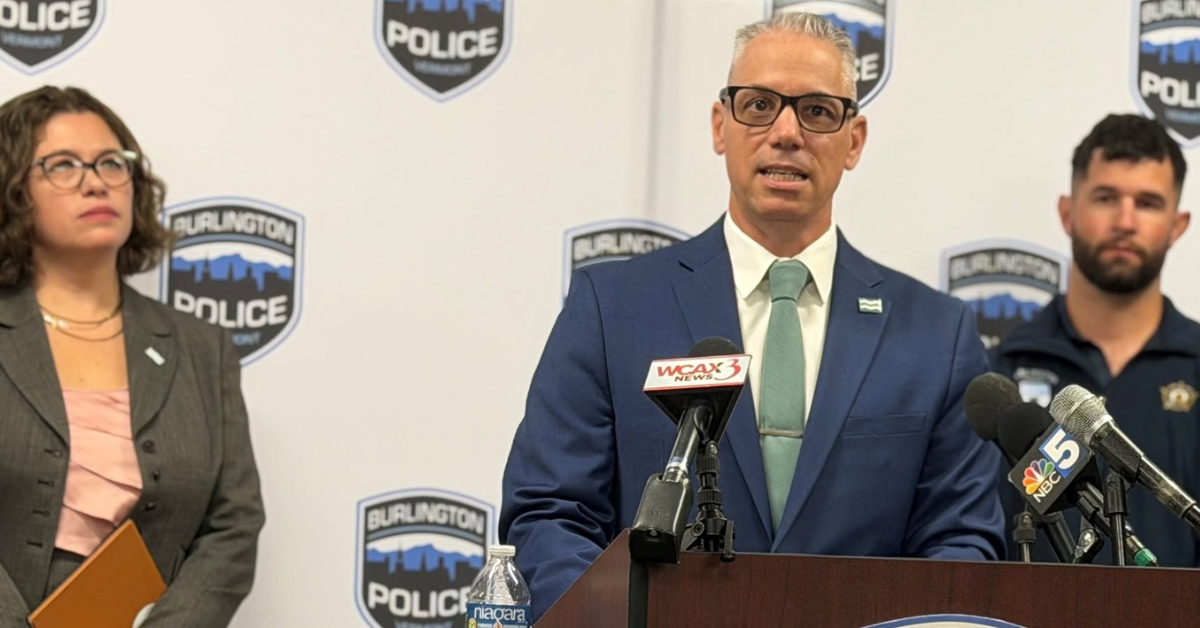
The introductory press conference for Geraci himself illustrated the pattern.
Mulvaney-Stanak led the majority of the event, framing the hire in terms of progressive values and community safety, while Geraci’s remarks stayed within carefully aligned language about trust, partnerships, and shared responsibility, totaling only about 3 minutes. No follow-ups, no second question-asking rounds, and no ability to get answers directly from Geraci. As Mike Donoghue reported, “the Mayor stayed at the podium and answered each of the six media questions directed at Geraci before turning the microphone over to him for his limited answer.”
What the partnership may hold is therefore less a question of personal chemistry than of institutional boundaries and pure marketing.
Mulvaney-Stanak’s record suggests she will continue to emphasize community-oriented approaches, language access, bias training, and non-enforcement responses to lower-level disorder.
Moreover, current and future mayors – Progressive or Democrat – will have to contend with a tarnished image on safety in the Queen City. Cleaning that reputation up won’t be easy, and will require many, painstaking efforts. One of those, naturally, will be the political and police marketing of the City: press conferences, transparent data, quick and clear responses to major incidents of crime, and more.
Mulvaney-Stanak, for her efforts, has attempted some progress on that front. Think: Main Street upgrades, the chief hire as a narrative shifting event, and, of course, the “Burlington is Back” press conference some weeks ago.
Important too in that untested recipe for change will be the mayor’s role, and relationship, in how the Burlington Police Department itself moves forward and how it markets that to the public and potential hires.
The potential friction points are somewhat predictable: when enforcement decisions become visible, when staffing numbers lag, or when business and neighborhood groups demand more aggressive order maintenance, progressive constituencies press for restraint.
How freely Geraci can describe conditions on the ground, and whether those descriptions require prior clearance, will soon reveal whether the new chief operates as an independent operational leader or as an extension of the mayor’s messaging strategy.
The operational challenges themselves remain substantial.
Recent public-safety reports show the department operating with roughly 54 sworn officers against an authorized strength that once exceeded 90 and remains well below pre-2020 levels despite modest budget increases.
One recent count cited 19 vacancies; the department is also short community-service officers and communications staff. A 2024 internal survey described burnout, high call volume, and a sense of crisis. Staffing losses after 2020, triggered in-part by the City Council’s earlier defund vote and subsequent resignations, has required prioritization of emergency calls over quality-of-life enforcement and the elimination of some specialized units.
Recruitment and retention therefore stand at the top of the agenda, another area where marketing will creep in, and already has.
Geraci has experience rebuilding a depleted force in Newburgh and has spoken of advocating for officers while requiring them to foster an inclusive culture. Burlington has increased signing bonuses and added positions in the latest budget, but competition for qualified candidates remains intense, and the city’s progressive reputation can work both for and against applicants.
Beyond headcount, the department confronts continued downtown public-safety complaints involving open drug use, homelessness, retail theft, and occasional violence.
Community trust, which Geraci sees as critical, remains uneven after years of leadership turnover and political conflict over the police role. Geraci has identified recruiting, officer wellness, community engagement, and shared responsibility for safety as priorities.
Leave a Reply