
By Kolby LaMarche
Burlington city officials have agreed to pay $150,000 to resolve a civil rights lawsuit filed on behalf of a black teenager with behavioral and intellectual disabilities, bringing to a close a case that began with a mother’s call for what she hoped would be a teaching moment and ended in allegations of escalated force, sedation and trauma.
The settlement, reached without a trial, stems from a May 15, 2021, incident at the family home in Burlington. Cathy Austrian, who had adopted her son J.A. as an infant, contacted Burlington police after learning he had taken several vape pens from a local gas station.
She informed responding officers of his documented disabilities, recent change in ADHD medication and a recent heart MRI, expecting the interaction to underscore the consequences of his actions.
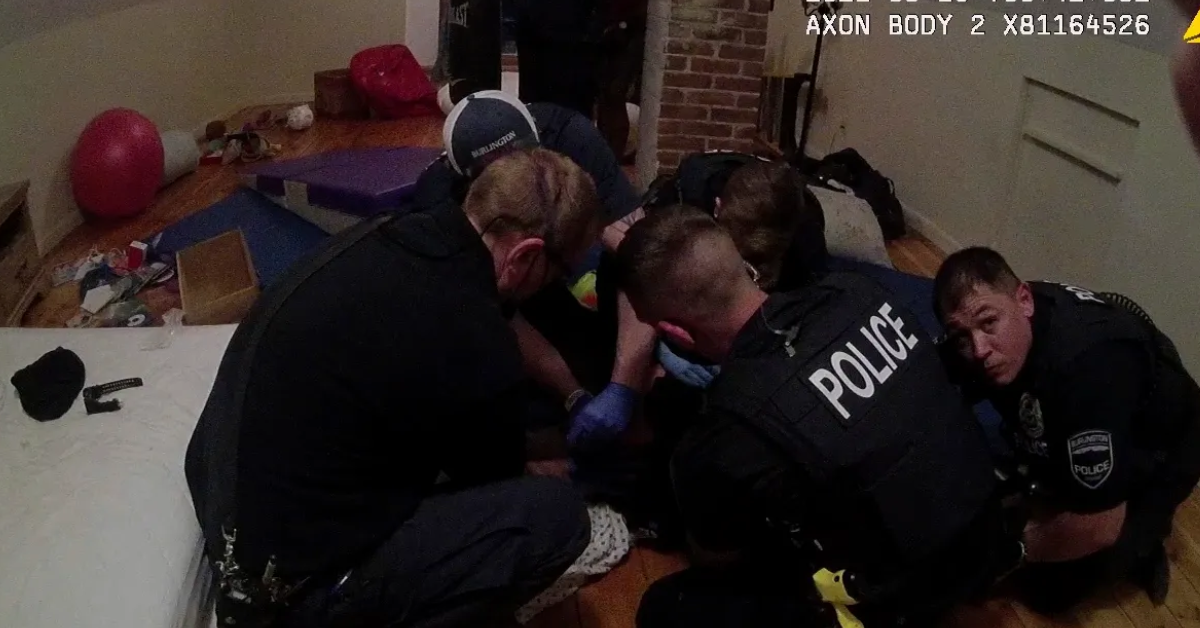
According to details in the lawsuit and related investigations, J.A., then 14 years old, was sitting calmly on his bed when officers entered his room. He handed over most of the items but held onto one.
Rather than issue a citation or disengage, officers threatened arrest and handcuffing, then physically grabbed him, forced his arms behind his back and wrested the final vape pen from his hands. As the teenager panicked, officers handcuffed him, attempted to maneuver him down a narrow staircase and eventually pinned him to the floor.
Paramedics were called. They placed an opaque mesh spit hood over J.A.’s head, described his distress as “excited delirium” — a term widely rejected by medical professionals — and administered ketamine, a powerful sedative typically reserved for adults in specific restraint scenarios and used here contrary to standard protocols.
J.A. was carried unconscious from his home on a stretcher and taken to the hospital, where he was discharged the following day, bruised and disoriented.
The city’s $150,000 payment resolves claims under Article 11 of the Vermont Constitution and the Vermont Fair Housing and Public Accommodations Act.
The lawsuit, filed in January 2024 by the ACLU of Vermont and co-counsel, alleged excessive force, racial discrimination and failure to accommodate J.A.’s disabilities.
Superior Court Judge Helen Toor had earlier denied the city’s motion to dismiss, finding the allegations sufficient to proceed on claims of excessive force, racial bias and disability discrimination.
The incident and its aftermath drew scrutiny too from the Burlington Police Commission.
After reviewing body camera footage and conducting an investigation, the commission found at least ten violations of six department policies. Commissioners determined the officers’ actions were likely influenced by implicit racial bias, the commission alleged.
Then-Acting Chief John Murad rejected those findings, cleared the officers and informed Austrian that no policies had been violated.
Hillary Rich, senior staff attorney with the ACLU of Vermont, commented on the resolution. “As we have seen too many times before, police needlessly and violently escalated a routine encounter and then refused to take responsibility for the harm they caused, instead blaming the victim,” she said.
The settlement comes against a backdrop of previous legal actions involving the Burlington Police Department. In recent years, the city has resolved other excessive force claims, including a $750,000 settlement with three Black men stemming from a 2018 incident and cases involving individuals with mental health challenges. A 2021 independent assessment of the department pointed to deficiencies in training, particularly around de-escalation and interactions with people with disabilities.
City officials have not issued a detailed public statement on the terms of the latest agreement beyond confirming the resolution. The payment closes the matter without admission of liability, a common feature of such civil settlements.
For Austrian and her family, the years since the 2021 encounter have involved not only legal proceedings but also efforts to seek internal accountability. After filing a complaint, she navigated the oversight process only to see the commission’s recommendations set aside. The Police Commission’s findings, later referenced in litigation, offered a window into internal reviews that critics have long argued fall short of meaningful reform.
The Burlington Community Justice Center reviewed a potential referral and declined to pursue it, determining he bore no fault in the escalated encounter. That detail, advocates say, reinforces questions about proportionality and judgment in the initial response.
Supporters of the family held rallies in the months after the lawsuit filing, calling attention to the body camera footage and demanding systemic change. The case drew coverage from local and national outlets, amplifying conversations already underway about police oversight in Vermont’s largest city.
As part of Vermont’s broader efforts on criminal justice and mental health, initiatives have aimed to divert non-violent calls away from traditional policing. Yet implementation remains uneven, and incidents involving youth or individuals with disabilities continue to test those systems.
The $150,000 figure reflects a compromise to avoid the uncertainty and expense of trial. For the family, it provides some measure of financial relief after years of legal pursuit.


Leave a Reply