
By Kolby LaMarche
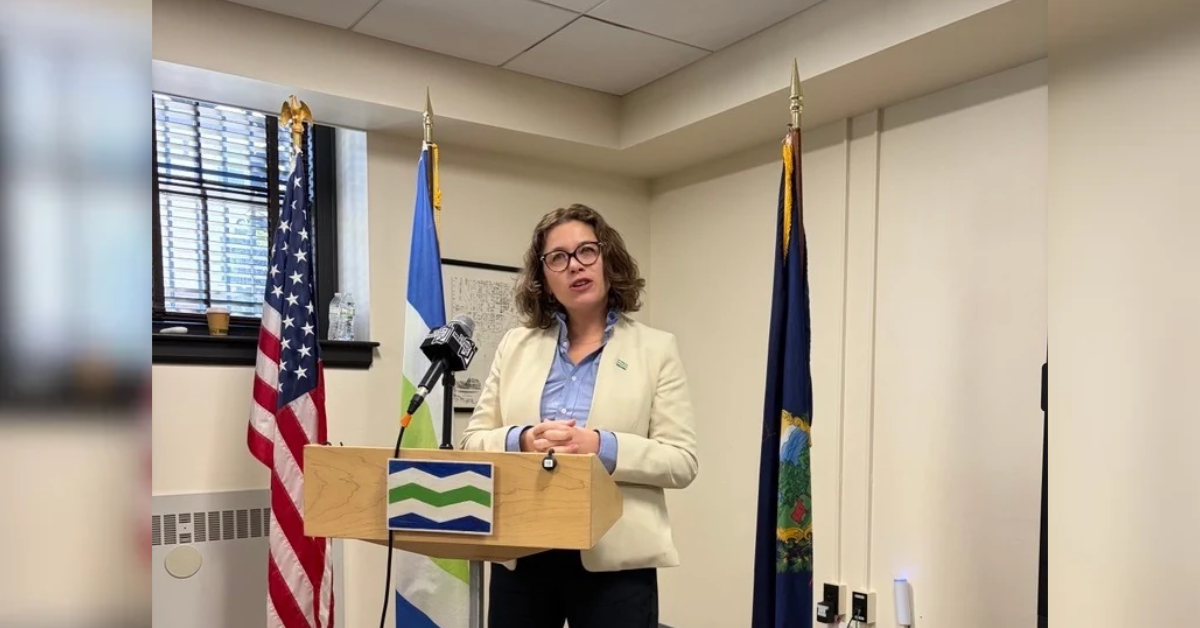
Mayor Emma Mulvaney-Stanak announced at a press conference today an update from the city’s Problem Property Initiative, describing a more coordinated effort to address vacant and neglected buildings as part of Burlington’s broader 2026 Housing Strategy.
The initiative, led by the Department of Permitting and Inspections, involves multiple departments tracking troubled properties, strengthening enforcement of the vacant building ordinance, and supporting rehabilitation or reuse.
Officials have also pointed to a public online tracker of noncompliant vacant properties as a step toward greater transparency.
“Good housing policy isn’t just about building new homes. It’s also about protecting, maintaining, and making the most of the housing we already have,” Mulvaney-Stanak said in remarks at a press conference. “As we advance Burlington’s 2026 Housing Strategy, we need to build forward while also addressing what’s been left behind.”
The strategy, launched in January, has included work on new housing production, affordability measures, and the use of public land, alongside efforts to reclaim existing stock. City officials have previously described roughly 30 problem properties citywide, many of them visible downtown or in neighborhoods where prolonged vacancy has raised concerns about safety, maintenance, and neighborhood conditions.
Several sites that had drawn attention are now seeing activity, according to the city.
At 184 Church Street, the building is under the management of Queen City Development Group, with redevelopment and renovation work advancing. The property, long associated with code and safety issues under prior ownership, had been a focus of enforcement before the sale.
At 32 Grove Street, vacant after a November 2025 fire, extensive renovation and substantial rehabilitation are underway. A permit has been approved for exterior work.
At 1070 North Avenue, vacant since October 2025, the property was sold in October 2026 to Vermont Federal Credit Union and is undergoing interior renovations for a new location. At 60 Colchester Avenue, previously tracked for violations and overdue fees, the building sold in October 2026 and is receiving safety upgrades.
The former Nectar’s space at 188 Main Street, which closed in July 2025, is under new management and undergoing renovations. At 141–143 North Avenue, vacant since September 2025, an environmental assessment is underway ahead of a potential sale.
Not all properties have moved at the same pace.
At 68 Pearl Street, vacant since 2019 and long listed among the city’s noncompliant sites, the city is pursuing enforcement under its Demolition by Neglect authority. The building has been described as unsafe for emergency entry, with condition violations. Earlier redevelopment plans by the owners were withdrawn.
At 281 Pearl Street, also vacant since November 2019, a 2026 violation related to parking lot use without zoning approval has been appealed to the Vermont Superior Court Environmental Division. That property has a history of zoning disputes and prior fines involving its owners.
DPI Director Bill Ward said the city appreciates owners who are investing and bringing buildings back into use, while continuing to apply available tools where responsibility is not taken. “We appreciate the property owners who are stepping up and investing in their buildings and working to bring vacant or neglected buildings back into productive use,” he said.
The vacant building ordinance requires permits and fees for properties that meet defined criteria, including prolonged unoccupancy combined with violations or the absence of concrete plans.
Fees can reach $1,500 per quarter for longer-vacant commercial or multi-unit buildings. Properties remain on the public tracker until issues such as unpaid fees, maintenance problems, or lack of occupancy plans are resolved. The cross-department task force meets monthly to review cases.
Mulvaney-Stanak described the work as practical and people-centered. “This is practical people-centered housing policy: protecting what we have, addressing long-standing challenges, and making sure Burlington’s neighborhoods remain places where people can live, work, and thrive.”
Leave a Reply