
By Kolby LaMarche
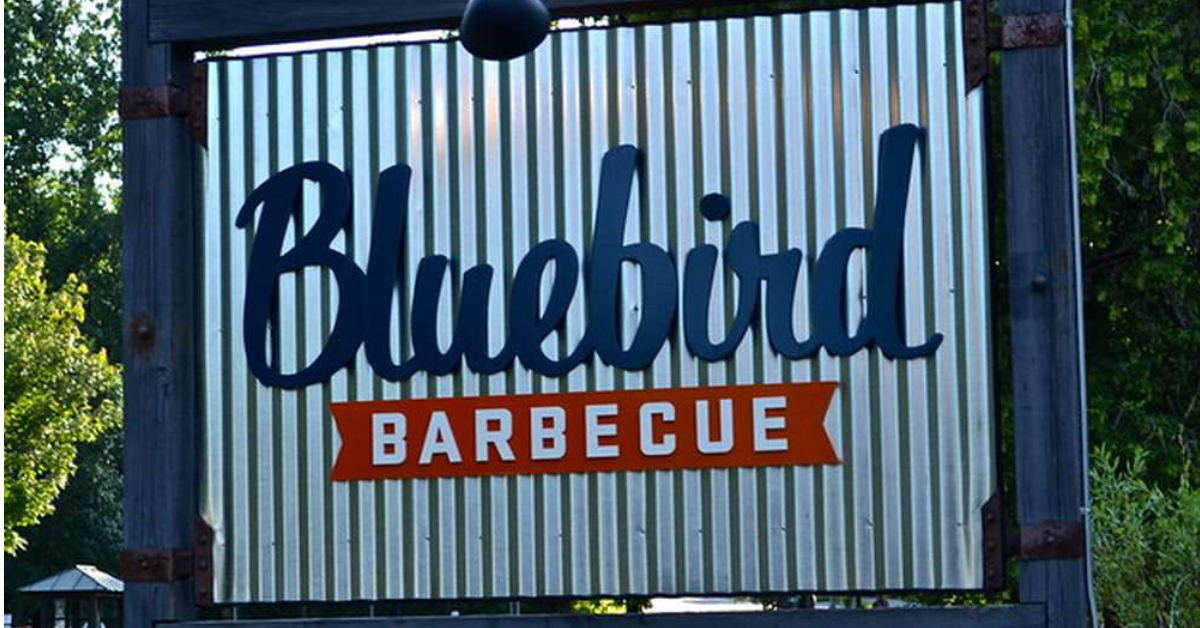
Bluebird BBQ, the longstanding barbecue restaurant on Riverside Avenue in Burlington, will serve its final meals this weekend.
Owner Sue Bette announced the permanent closure on Thursday, with the last service set for Halloween, Saturday, October 31.
In a prepared statement, Bette said, “It’s time for Bluebird to say goodbye. We wish Bluebird could continue on, but the conditions just aren’t lining up for Bluebird to be Bluebird,” the statement read.
“It’s a short farewell tour, and the best way for us at this time to say goodbye.” She also thanked current and former employees for helping make the restaurant a gathering place for the community.
For its final three days, the restaurant is offering only curbside pickup from 4:30 to 7:30 p.m.
The business has operated at 317 Riverside Avenue for 17 years in a more than century-old farmhouse on the edge of the Winooski River, near the border of Burlington’s Old North End and the city of Winooski.
It began as Bluebird Tavern, which Sue Bette opened in 2009 as Vermont’s first gastropub, emphasizing farm-to-table cooking and a neighborhood gathering spot.
In 2012 the space shifted to Bluebird Barbecue, focusing on slow-smoked meats, from-scratch sides, smoked wings, salads, and a selection of Vermont beers and cocktails.
Although Bette’s statement did not cite the condition of the land as a factor in Bluebird’s closure, the restaurant sits on a stretch of Riverside Avenue that has long been recognized as geologically unstable.
The steep slope between the avenue and the Winooski River has experienced repeated landslides for decades and faced warnings of failure by local authorities.
University of Vermont researchers Paul Bierman and Bella Bennett documented at least 20 landslides along less than a mile of the corridor over the past 70 years, many following heavy rainfall. A peer-reviewed study they published in 2024 in the Quarterly Journal of Engineering Geology and Hydrogeology, along with earlier work, described the slope as at imminent risk of further failure.
The instability stems from both natural and human factors.
The underlying glacial sediments are inherently sandy and poorly cohesive. Over decades, the slope was repeatedly extended and repaired with uncompacted fill that included construction debris, concrete, appliances, tires, and, after major slides in 1955, hundreds of junked cars.
Organic material in the fill has rotted, causing settlement. Impervious surfaces such as pavement and parking lots increase runoff during storms, saturating the ground and reducing shear strength.
A major slide on Halloween 2019 illustrated the ongoing problem. Historic records show earlier events in 1928, 1955, the 1970s, and 1981 that damaged the road and adjacent structures. In some places the edge of the slope has advanced outward by tens of feet through successive filling, placing buildings and parking areas on less stable material than the original terrain.
City and state officials have responded with slow, targeted buyouts through FEMA’s Hazard Mitigation Grant Program.
Properties at 389 and 505 Riverside Avenue have been or are being acquired so the structures can be removed and the land returned to open space.
Scott Gustin, Burlington’s principal planner, has described the slope as deteriorating and beginning to sag and slide.
Researchers and officials have urged broader reforestation with deep-rooted native plants, removal of additional buildings and paved surfaces where feasible, improved drainage, and monitoring, arguing that tree roots offer the most effective and lowest-cost stabilization.
They have noted that delay increases the chance that more structures could be undermined, with potential risks to occupants, the road, and the river itself. While Bluebird’s specific parcel has not been publicly identified for an immediate buyout in the same manner as the properties farther north, the documented pattern of movement along the corridor places the entire riverbank stretch under continuing scrutiny.
The closure, too, arrives amid a broader wave of restaurant and business shutterings in Burlington. The Vermont Pub & Brewery, Vermont’s oldest craft brewery and the state’s first brewpub, announced it will close on November 14 after 38 years, citing an inability to recover to sustainable business levels since 2020.
Radio Bean, a music venue and bar that had operated for 26 years, closed in early September after its owner cited an insurmountable insurance bill and accumulated debts.
The Grey Jay, a Mediterranean-influenced brunch spot and sister restaurant to Honey Road that had been a James Beard Award finalist, ended service in mid-October. Nectar’s, a landmark music venue open for roughly 50 years, closed permanently in the summer of 2025. Other recent losses include ArtsRiot, The Gryphon, and several smaller retail and food businesses along Church Street and downtown.
Leave a Reply