
By Kolby LaMarche
Demonstrators, organized by groups like Green Mountain Democratic Socialists, called for accountability from federal immigration authorities while raising concerns about the role local law enforcement agencies play when ICE operations come to Vermont.
For many protesters, the issue extends beyond ICE itself. They argue that local police departments must examine their own decisions when assisting federal authorities, particularly as trust between law enforcement and immigrant communities remains a central concern.
The gathering comes months after a controversial ICE operation in South Burlington that involved multiple Vermont law enforcement agencies, including Burlington police. The incident led to criticism from community members who questioned whether local officers did enough to protect residents during the federal action.
Over 100 citizen complaints were submitted to Burlington Police regarding that incident. None were found to have merit enough to warrant disciplinary action against any accused officers, a city investigation found.
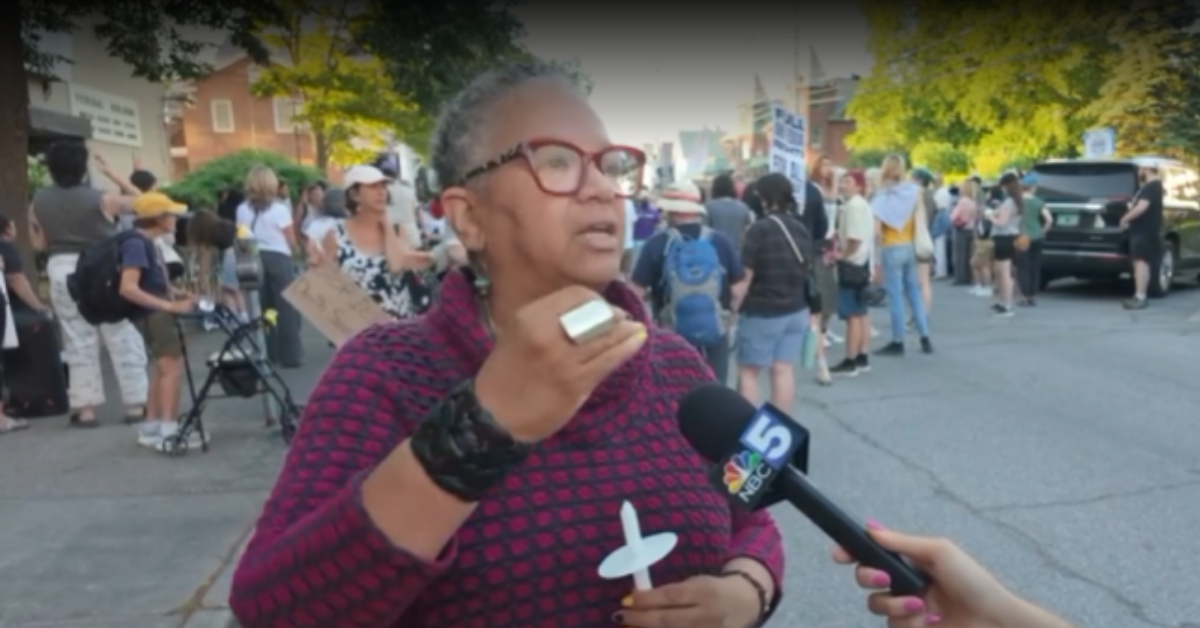
Melo Grant, Burlington city councilor for Wards 2/3, said the response from local police agencies has not fully addressed what she views as shortcomings in their own actions.
“Police acknowledged all the issues with ICE,” Grant told NBC5.
“They openly acknowledged it — Vermont State Police, South Burlington police, Burlington police — but didn’t acknowledge what they could have changed about their own actions to protect people. So, then they look like the enemy too” (emphasis added).
Grant, in recent years, has made clear her frustration with local police, particularly around compliance with fair and impartial policing and cooperation with federal authorities.
Grant, who has been a councilor since 2023, has repeatedly taken aim at former police chief, Jon Murad, during his tenure in the role, citing her disagreement with how Murad was running the department – and with council Democrats.
Grant, telling Seven Days earlier this year, said “Democrats were so far up Murad’s ass that they couldn’t see the light of day,” Grant said of the former chief. “Speaking out against the police chief was just something you’re not supposed to do.”
Before joining the City Council, Grant served on the Burlington Police Commission and participated in the city’s Special Committee to Review Policing Policies. She has said her interest in police accountability grew after high-profile use-of-force controversies involving Burlington police officers, including lawsuits involving the department.
Grant has consistently argued that improving public safety requires more than traditional law enforcement responses.
Her approach has placed her at the center of some of Burlington’s most significant debates over policing, being somewhat – for the Progressives – as an expert on the topic.
Supporters have pointed to her experience and willingness to challenge existing systems, while critics, even those on the council, have questioned whether her approach gives enough weight to traditional enforcement tools during periods of rising public concern about crime and disorder.
The debate over ICE has brought those disagreements back to the forefront. For Grant and other critics, the issue is not simply whether officers followed orders or acted within existing agreements.
The larger question is whether local police involvement in controversial federal actions can weaken relationships built between officers and the communities they serve – relationships that have already been strained, Grant says.
Law enforcement officials have offered a different perspective, arguing that officers are often placed in difficult situations where they must balance competing responsibilities.
Police agencies have said their role during ICE-related incidents has been focused on maintaining public safety, managing crowds, and responding to requests for assistance rather than carrying out federal immigration enforcement.
Following the South Burlington ICE operation, the Burlington Police Commission reviewed the department’s response as residents raised concerns about officer conduct and the relationship between local police and federal immigration enforcement. The commission discussion came after complaints were submitted regarding the incident, including questions about whether Burlington officers followed city policies.
Police officials have defended their response, saying officers were tasked with maintaining public safety and managing a tense situation rather than carrying out federal immigration enforcement. Supporters of law enforcement involvement argue that agencies have a responsibility to respond when public safety concerns arise, regardless of the larger political debate surrounding ICE.
Opponents, like Grant, argue that local participation in ICE-related operations can damage trust with immigrant residents and make communities less willing to cooperate with police.
That divide was visible throughout the Burlington demonstration, where protesters called for stronger protections for immigrant communities and greater scrutiny of law enforcement actions.


Leave a Reply