
By Kolby LaMarche
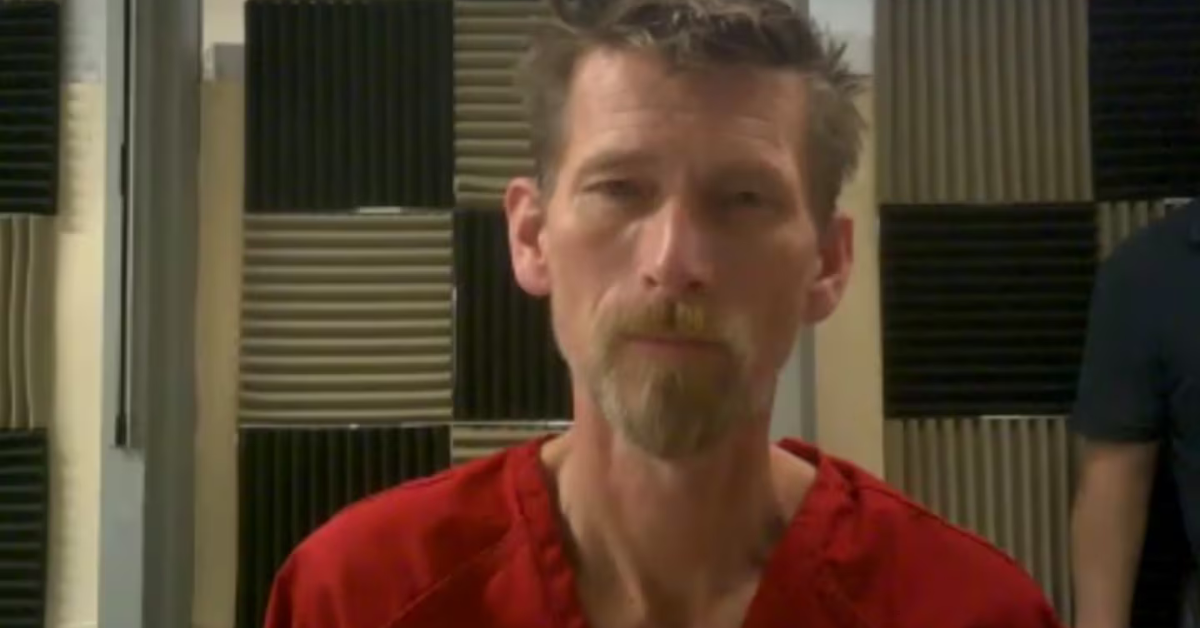
In a case that continues to reverberate through Burlington and beyond, Jason J. Eaton, the man accused of shooting three college students of Palestinian descent more than two years ago, has been found competent to stand trial following a recent court-ordered psychiatric evaluation.
The development, revealed during a status conference on December 15, in Chittenden County Superior Court, paves the way for a potential trial as early as summer 2026—but notably, no hate crime enhancements have been added to the charges, despite persistent demands from victims’ families, community leaders, civil rights organizations, and political figures who believe the evidence supports such a classification.
Eaton, now 50, faces three counts of attempted second-degree murder and has pleaded not guilty.
He has been held without bail since his arrest in November 2023. During the latest hearing, Eaton appeared via video from prison and remained silent as Judge John Pacht discussed the sealed competency report.
His defense attorneys, disagreeing with the findings, announced to the court they would hire an independent expert for a separate evaluation.
The shooting occurred on the evening of November 25, 2023, near the University of Vermont campus on North Prospect Street. Victims Hisham Awartani, Kinnan Abdalhamid, and Tahseen Ali Ahmad—20-year-old childhood friends from the West Bank, attending Brown University, Haverford College, and Trinity College respectively—were in Burlington visiting family for Thanksgiving.

The three were walking together, speaking a mix of English and Arabic, with two wearing keffiyehs, traditional Palestinian scarves symbolizing cultural identity.
According to police affidavits, Eaton allegedly stepped off the porch of his nearby apartment without uttering a word and fired multiple rounds from a handgun. Awartani was paralyzed from the chest down after a bullet struck his spine; Abdalhamid and Ali Ahmad sustained serious but non-paralyzing injuries.
The attack unfolded amid heightened national tensions following the October 7, 2023, Hamas attacks on Israel and the subsequent Israel-Hamas war, which sparked a surge in reported anti-Palestinian, anti-Arab, and anti-Muslim, and anti-Jewish incidents across the U.S.
Burlington police arrested Eaton the following day after federal agents encountered him during a canvass. He reportedly told officers, “I’ve been waiting for you,” before requesting a lawyer.
A search of his apartment uncovered the firearm and other evidence linking him to the shooting.
From the outset, the incident drew widespread condemnation and calls for it to be prosecuted as a hate crime.
Victims’ families issued statements urging authorities to treat the attack as bias-motivated, citing the students’ visible Palestinian identity markers. Organizations like the Council on American-Islamic Relations (CAIR) and the Arab American Anti-Discrimination Committee demanded thorough investigations into hate as a motive.
Political leaders, including U.S. Senator Bernie Sanders (a former Burlington mayor), President Joe Biden, and Vermont Governor Phil Scott, decried the violence, with many highlighting its potential ties to rising Islamophobia.
Community vigils in Burlington featured pleas for recognition as a hate crime, and advocates argued that the targeted nature—young men speaking Arabic and wearing keffiyehs—met the threshold for bias motivation.
Vermont’s hate-motivated crime enhancement statute, updated in 2021 to require proof that bias motivated the crime “in whole or in part” (rather than solely and maliciously), was seen by some as making such charges more feasible.

Yet, despite these vocal appeals from numerous community leaders, faith groups, and advocates who firmly believe hate crime enhancements can and should apply, Chittenden County State’s Attorney Sarah George has repeatedly stated that insufficient evidence exists to support adding them.
Vermont lacks a standalone hate crime law; instead, prosecutors can seek sentence enhancements if bias is proven beyond a reasonable doubt.
George has described the shooting as a “hateful act” but emphasized that most successful hate crime cases in the state involve explicit slurs or statements—none of which Eaton allegedly made.
In fact, in social media posts revealed soon after the shooting, and posted before, Eaton allegedly made disparaging comments towards the nation of Israel on Twitter, now X, and supportive ones of Palestinians.
As of late 2025, no enhancements have been filed, and recent reports indicate they remain unlikely.
Eaton’s career spanned farming, financial services in New York, and outdoor education. Family members have spoken of his mental health struggles and recent instability.
Earlier in the case, Eaton claimed in court to have acted on orders from the CIA and Mossad (Israeli intelligence), prompting multiple competency evaluations.
Previous assessments found him fit, and the latest aligns with those, though his defense continues to challenge it. They have explored an insanity defense, which Eaton has resisted, and requested attorney changes multiple times.
If competency holds, prosecutors anticipate a trial in June 2026 or later. The defense may seek a venue change due to heavy local media coverage. Jury selection could involve detailed questionnaires.
Leave a Reply