
By Kolby LaMarche
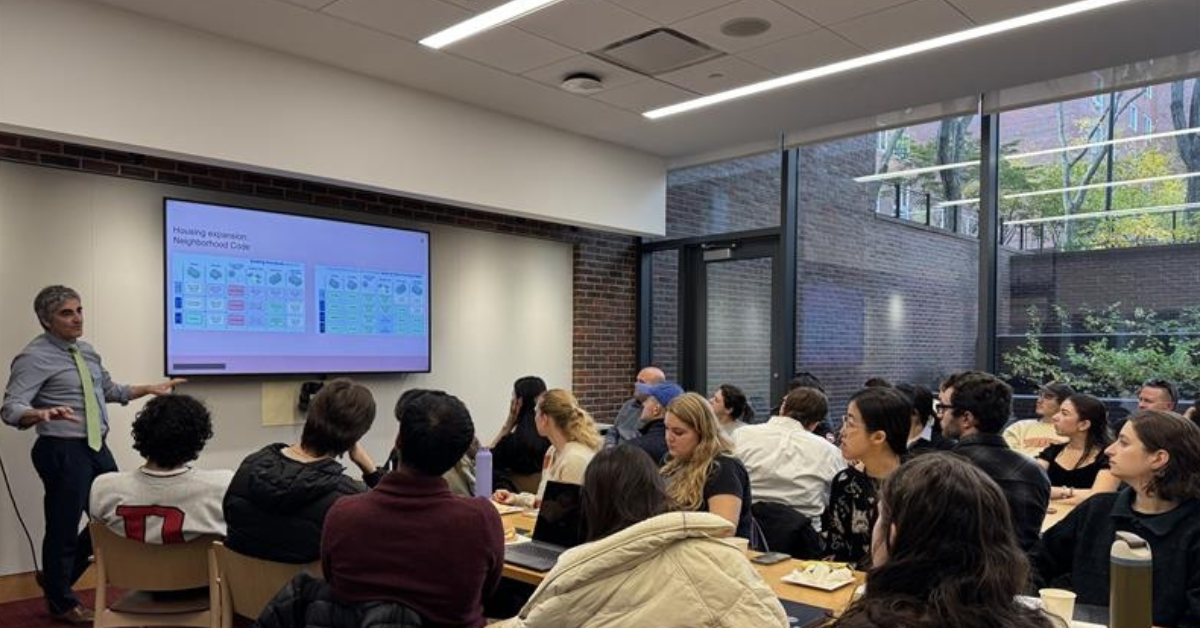
Former Burlington Mayor Miro Weinberger spoke this week at Harvard’s Kennedy School, where he is spending the year as a visiting fellow. In an interview posted on the school’s blog, he looked back on his twelve years in office and talked about the issues he still works on: housing, public safety, and climate policy.
Weinberger told the Harvard audience that housing is the topic he knows best, first as an affordable-housing developer and later as mayor.
He pointed to the roughly 2,100 net new housing units permitted in Burlington during his time in office, the most for any twelve-year stretch in recent history. A major zoning rewrite in 2016 and later changes that required a percentage of new units to be income-restricted were the main tools his administration used.
The numbers are accurate, but they come with context. When Weinberger took office in 2012 the median home price in Burlington was about $257,000. When he left in 2024 it was $525,000.
Rent for a two-bedroom apartment rose from around $1,200 a month to over $2,100. The rental vacancy rate stayed below 2 percent for almost the entire period, often closer to 1 percent.
In the interview he said Burlington built more housing per capita than almost any similar city in New England, which city planning department data supports. Still, demand far outran supply and prices kept climbing.
On public safety, Weinberger said the country is “still in a challenging time” and noted he recently brought his embattled former police chief, Brandon del Pozo, to Harvard to talk about opioids and policing.
Crime trends in Burlington during his tenure were mixed. Violent crime ended 2023 about where it started in 2012. Property crime, mainly car break-ins and shoplifting, rose roughly 30 percent over the same period.
Overdose deaths spiked in 2021-2023 before dropping again in 2024. However, the police department spent most of the last five years 15 to 20 officers short of its authorized strength.
Since Miro Weinberger left office in April 2024, Burlington’s crime rates have shown a mixed picture. Early 2024 saw a 23% rise in incidents compared to 2023, with police handling more calls despite staffing shortages—down to 69 officers from an authorized 87.
Violent crime held steady at around 4.15 per 1,000 residents, per 2023 data, but property crimes like thefts climbed 30% over the prior decade.
Climate policy was the third area the former mayor highlighted. One of Weinberger’s long claimed achievements is that Burlington reaching “net-zero energy” across city government operations.

In 2020, the Burlington Electric Department fully transitioned to 100 percent renewable electricity and carbon-neutral district heat, finishing a goal that began before he was mayor.
City buildings and vehicles met net-zero targets through a mix of on-site solar, efficiency upgrades, and the purchase of out-of-state renewable energy credits and Vermont wood-chip carbon offsets. During his time as mayor, Weinberger received backlash over the operation of the McNeil energy plant, which some claim hurts climate.
Burlington Electric Department recently released a report on potentially retrofitting the decades-old energy plant, aiming to make it more climate friendly.
Since leaving office in April 2024, Weinberger has used the Harvard fellowship to start Let’s Build Homes, a new statewide group that pushes for faster permitting and more apartments across Vermont. He told students the organization probably would not exist without the time and focus the fellowship gave him.
He also encouraged Kennedy School students to consider careers in city or town government rather than jumping straight to state or federal jobs. He said that local government gives officials the most direct contact with residents and lets them see results quickly. He pointed to programs like the Taubman Center’s Transition Term, which places students in city halls for a semester, as good ways to test the work.
Weinberger also pointed to his great success in his chief campaign promise in 2012: fixing Burlington’s bond rating. “We went from the edge of junk bond status to regaining our AA rating in just over nine years,” he said.
Weinberger has not said whether he plans to run for higher office. For now he is teaching classes, holding office hours for students, and is splitting time between Cambridge and Vermont, according to the school. His Harvard post runs through the spring semester.
Leave a Reply