
By Kolby R. LaMarche
Burlington’s plan to open Vermont’s first overdose prevention center (OPC) by 2026 is hitting roadblocks as community opposition mounts, even as the city prepares to launch a public survey next month to help pick a location.
The city’s effort to address the opioid crisis took a big step forward in September when the City Council unanimously approved a $2.2 million state grant from opioid settlement funds to build the center.
The facility, operated by Vermonters for Criminal Justice Reform, will offer a supervised space for people to use pre-obtained drugs—both by injection and smoking—while providing medical oversight and treatment referrals to reduce overdoses and public drug use.
City data show most overdoses occur near Church Street, making it a likely spot for the center. Theresa Vezina, the city’s special assistant for OPC implementation, said in June, “The data shows that the majority of overdoses happening in Burlington are happening in the downtown region.”
But not everyone’s on board. The Ward 3 Neighborhood Planning Assembly (NPA), representing downtown Burlington, passed a resolution strongly opposing a downtown location.
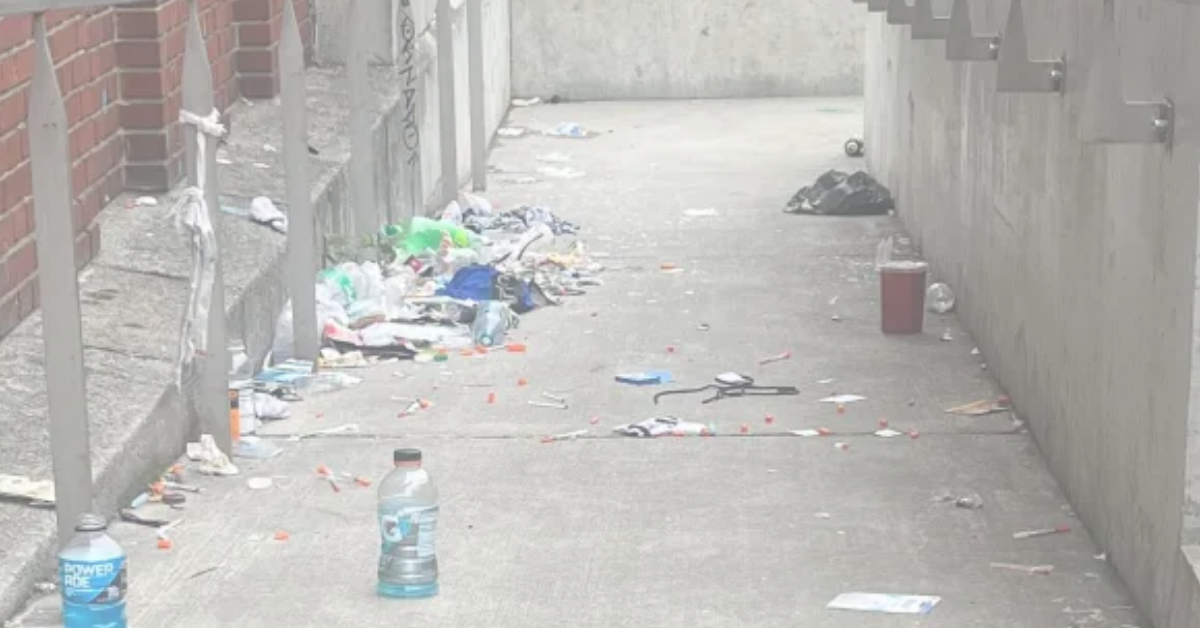
The resolution supports an OPC in principle, citing its potential to curb public drug use, syringe litter, and overdose deaths, but insists it belongs at a medical facility and not in the Central Business District. The NPA argues downtown residents and businesses already deal with negative impacts from public drug use, like syringe litter near the Church Street Marketplace, where a syringe distribution program operates.

In the resolution, residents expressed they “vigorously [oppose] the establishment of an overdose prevention center within the downtown core.”
They worry an OPC downtown would worsen perceptions of the area as unsafe. The resolution also calls for a local ordinance banning public drug use and for the state to add treatment beds and create a compulsory care program for those using drugs publicly.
In September, Burlington received an “Order to Show Cause” from Barre. Addressed to the Burlington City Council and federal authorities, including the U.S. Attorney General and the U.S. Attorney for Vermont, the letter demands the city explain how the OPC—referred to as a “safe shoot-up site”—doesn’t violate federal drug laws, provide a sanctuary from law enforcement, or support “narcotics-mafia” interests.
It claims the city’s use of $2.2 million in opioid abatement funds for the center is an unlawful scheme to enable illegal opioid use.
Nonetheless, the city is moving forward on site selection and community input. A public survey, set to be published in early November, will ask residents for feedback on potential OPC locations, with results expected to guide a final site decision by year’s end.

Theresa Vezina, special assistant for overdose prevention center implementation, was present at the Ward 3 NPA meeting, where she thanked community members for their input and asked for more of it, but did not confirm that the site wouldn’t likely be placed in the downtown core.
The city notes that while downtown’s overdose hotspot makes it a logical choice, officials are open to other sites to balance public health and community concerns. The UVM Medical Center, favored by Ward 3’s NPA, is one option under consideration, though its distance from downtown could limit accessibility for those most in need. UVM has not released any statement regarding the city’s proposed site.
Vermont’s overdose deaths are down in 2025, with 54 reported so far, but public drug use remains a visible and growing issue.
The state’s OPC guidelines, set by the Vermont Department of Health, require facilities to offer smoking spaces alongside injection areas. Burlington’s center will start small, the city says, with plans to scale up based on need, but it faces a tough road ahead.
Leave a Reply