
by Kolby R. LaMarche
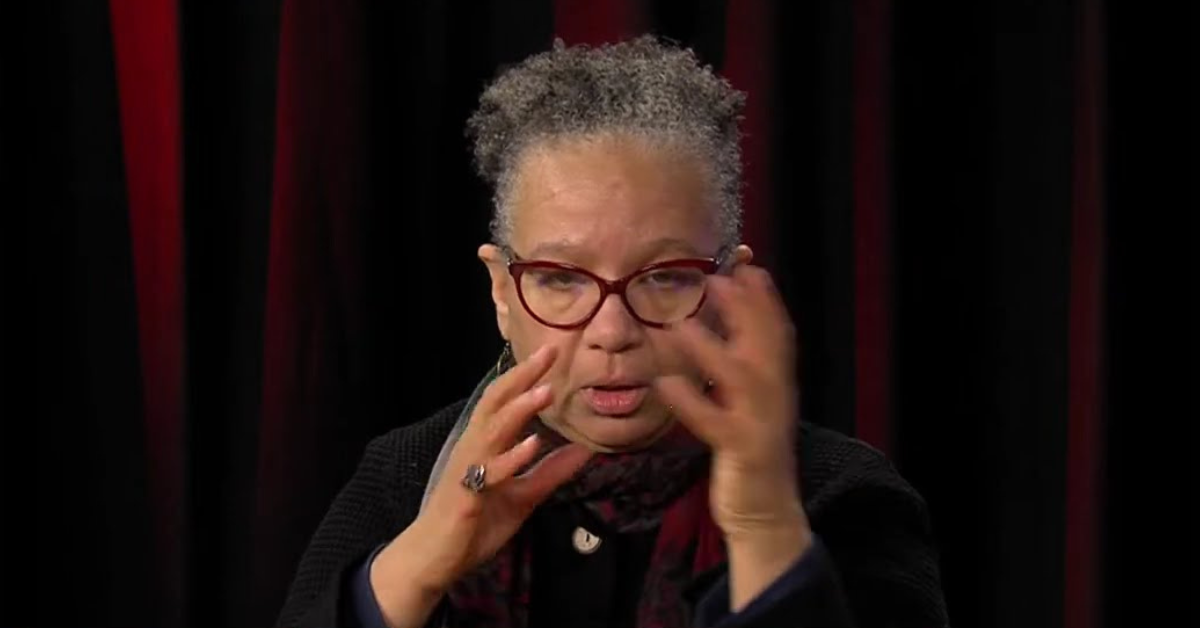
On Monday, Progressive City Councilor Melo Grant appeared on WVMT’s The Morning Drive with hosts Anthony Neri and Dan Feliciano for the first time since former host and long-time elected Kurt Wright retired from the show earlier this year.
Grant began with federal politics, spotlighting the withholding of federal grants and its impacts to organizations that serve Burlington, stating the federal government needed to deliver on the “promised” money.
The talk then shifted to Governor Phil Scott. Grant gave him credit, initially, on two fronts: refusing Vermont National Guard support for Immigrations and Custom Enforcement (ICE) and spearheading the “Situation Table,” a relatively new public safety collaboration. But she didn’t hold back, moving on to blast Scott for ignoring Burlington’s needs, saying “He does not care about poor people, he does not care about the working class… [or] Burlington… he openly disparages this city,” Grant said.
The “Situation Table” is a collaborative model to boost public safety. Created by the private firm O2SL, the approach seeks to unite police, social services, and community groups to address high-risk cases using technology and data. Supported by the Vermont Public Safety Enhancement Team (PSET) Consortium, it targets individuals at Acutely Elevated Risk (AER) to prevent crises like crime or substance use issues, according to O2SL.
In June, over 60 stakeholders, including Burlington Police, UVM Medical Center, and Howard Center, trained with O2SL and QRT National to learn the Four-Filter Process and data-sharing protocols. The program, part of Governor Scott’s 10-Point Public Safety Plan, aims to reduce incidents through early intervention, addressing gaps in housing, mental health, and substance use services.
The model, however, sparked a heated exchange with new co-host Dan Feliciano and Grant.
It’s a new model for Burlington, aiming to reduce incidents through coordinated action rather than reactive fixes. Still early, the Table draws on similar efforts elsewhere to curb crime and social issues. Grant called it a bold step toward prevention-focused safety.
Feliciano, a problem-solving instructor, applauded the model but had questions for Grant on the Table’s metrics. “So what does success look like and how is it measured?” he asked.
Grant replied, “It’s the reduction of incidents.”
When Feliciano pressed for specifics—“How much? 10%, 20%, what is the goal?”—Grant held firm. “The goal is a reduction. We are never going to get to zero… we are talking about something that is new… I will not throw a number on that,” she said. “You want me to throw out a number when we just started it?,” Grant asked. “Yes!” Feliciano said firmly. “I will not do that,” Grant shot back, insisting she believed the numerical targets were unfair for a program still in its infancy.
The last public statement from Mayor Emma Mulvaney-Stanak’s office on Burlington’s Situation Table was in early June. The Table, which held two trainings in late June and Early July, has yet to announce plans for further training, meetings, or events


Leave a Reply