
By Kolby LaMarche
For nearly four decades, the statue known as Chief Grey Lock stood as a symbol of indigenous resilience. Now, as the city navigates the removal of that quite weathered monument, a new donation from the Abenaki Nation of Missisquoi Tribal Council promises to reclaim the space with authentic representation—but not without stirring debates over cultural authenticity and tribal recognition that started years ago.
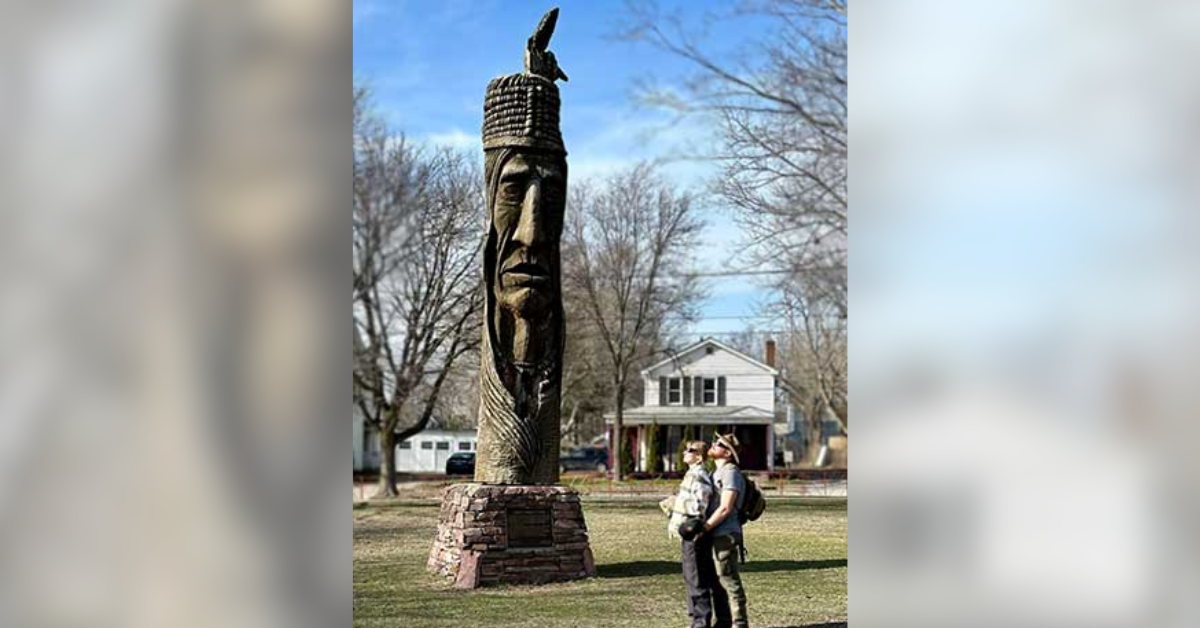
The story begins, for the current statue, in the early 1980s, when Hungarian-born sculptor Peter Wolf Toth arrived in Burlington. Fleeing Soviet oppression in his homeland, Toth identified with the struggles of marginalized peoples, news reports read.
He embarked on an ambitious project: the Trail of the Whispering Giants, a series of massive wooden statues depicting Native American figures, one in each U.S. state. By 1984, Toth proposed his 47th giant to Burlington officials, offering to carve it from a local red oak tree at no cost to the city.
Dedicated on July 22, 1984, the 34-foot-tall sculpture depicted Chief Grey Lock, a revered Abenaki leader from the early 18th century.
Grey Lock, also known as Wawanolewat, was a Western Abenaki war chief who led raids against colonial settlements during Dummer’s War (1722-1725). Born around 1670 near the Missisquoi River, he evaded capture for decades.
Toth’s work, mounted on a stone base in the park, was intended to heighten national appreciation for Native Americans. Though not crafted by an Indigenous artist, it was embraced by the local Abenaki community, who named it and integrated it into their cultural narrative.
Over time, however, exposure to Vermont’s harsh weather took its toll.
By 2019, the 6- to 8-foot feather atop the statue had degraded into a public hazard, prompting fencing and eventual removal after it fell.
In fall 2024, Burlington City Arts (BCA) commissioned Tree Works for a full condition assessment. The verdict: severe internal rot rendered the entire structure unsafe. On July 24, 2025, the statue was dismantled and removed.
Using funds from City Council Resolution 6.01—adopted all the way back on March 21, 2022, to support Indigenous initiatives—the tribe commissioned artist Brandon Wilson of Mountainside Sculpture & Design in Jay, Vermont.
Wilson, a lifelong Vermonter who honed his skills carving wood after high school and stints out west, specializes in large-scale outdoor pieces. His portfolio includes intricate animal sculptures, like a 13-foot maple stump transformed into a jumper horse and rider in Virginia, and mountain lions emerging from pine stumps in New Hampshire.
For this project, he created a double-sided wooden statue featuring an Abenaki figure, valued at $20,000.
After some time of no movement whatsoever, the proposal eventually advanced through committees.
On March 13 of last year, the Public Art Committee recommended acceptance, followed by the BCA Board of Advisors on March 18.
Enter the Abenaki Nation of Missisquoi, a state-recognized tribe based in Swanton, Vermont, who – in recent years – has seen their share of argument and debate surrounding their tribal recognition.
Québec-based Abenaki bands, federally recognized in Canada, have questioned the Missisquoi group’s authenticity, part of a broader debate over Vermont’s state-recognized tribes.
In August of 2025, representatives from the Odanak and Wôlinak First Nations urged Burlington leaders to reject the sculpture, calling it inauthentic and tied to “pretendian” claims. This followed heated testimony that same year in the Vermont legislature.
Despite the pushback, however, the proposal reached the City Council. Tuesday, councilors considered a motion to authorize BCA to accept the gift, execute documents, and prepare the site. In a memorandum from Kraft, the request emphasized maintenance via the 1% for Public Art fund, with an accelerated deaccession clause for the wooden work’s eventual weathering.
The council delayed the vote Tuesday night, opting for more public input amid the ongoing debate. Advocates like Chief Brenda Gagne of the Missisquoi Nation argue the statue honors true Abenaki heritage, created in collaboration with the community.
Critics, including Québec Abenaki leaders, counter that it risks perpetuating inaccuracies.
The project was referred to the Racial Equity, Inclusion, and Belonging committee for further deliberation.
Leave a Reply