
By Kolby LaMarche
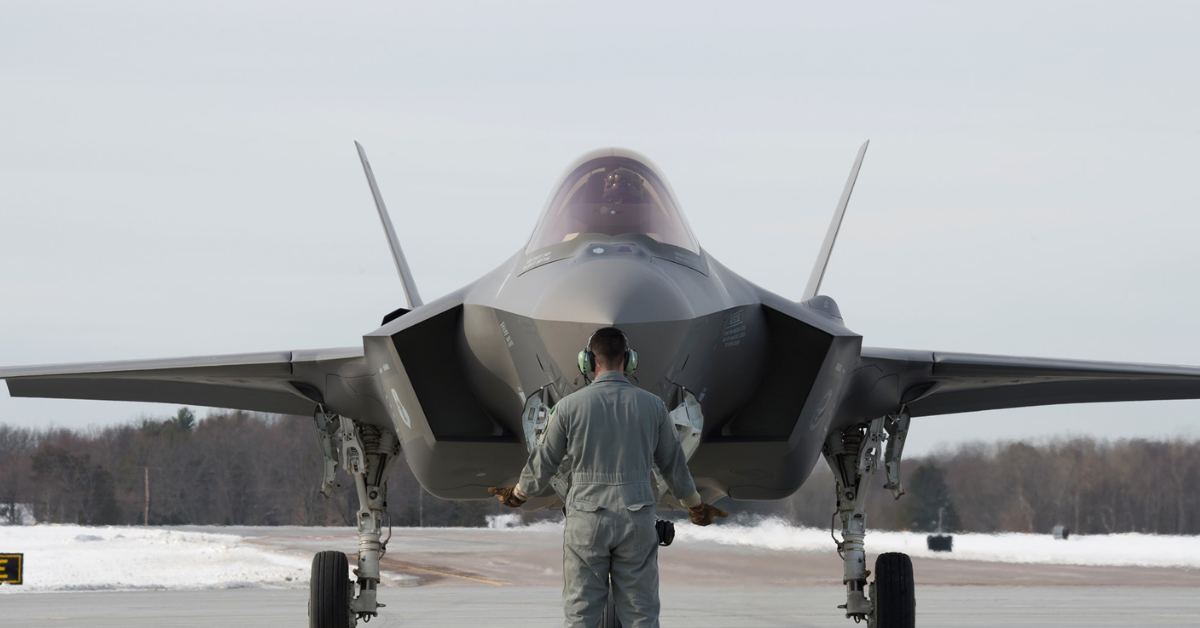
As tensions seemingly simmer between the United States and Iran, the Vermont Air National Guard’s 158th Fighter Wing isn’t resting. It has begun redeploying its advanced F-35A Lightning II jets from Burlington International Airport.
The departures, part of a broader military shift from Caribbean operations to the Middle East, marked a significant moment for the local bases’ history and its second deployment in less than one year.
This second redeployment follows the Guard’s initial mobilization in mid-December 2025 to Puerto Rico under Operation Southern Spear, a U.S. initiative aimed at pressuring the Maduro regime in Venezuela through counternarcotics and potential intervention activities.
With Venezuelan operations concluding after the capture of Nicolas Maduro, the focus has pivoted eastward. President Trump’s administration has described the buildup in the Middle East as a “massive armada” to counter Iranian threats, including recent escalations tied to nuclear sites and regional conflicts.
Local tracking and official briefings indicate that the first wave of F-35As began crossing the Atlantic in late January. On January 29, six aircraft departed Puerto Rico, refueling mid-air with KC-46 Pegasus tankers before landing at Lajes Air Base in Portugal’s Azores.
Some proceeded to Rota Naval Station in Spain, where they encountered brief logistical holds.
By early February, additional flights returned temporarily to Burlington for maintenance and crew rotations. On February 4, four F-35As, escorted by a giant KC-135R tanker, landed back to the Vermont Air National Guard Base.
These stopovers at Burlington International Airport have been brief but impactful, the Department of Defense reports. In the days since more F-35s landed, there has been increased activity, including cargo transfers via C-17 Globemaster III aircraft, with shipments now delivered to Jordan on Feb. 6.
The likely destination for many of the jets and cargo is Muwaffaq Salti Air Base in Jordan, a key U.S. Central Command hub. Here, the F-35As could support suppression of enemy air defenses (SEAD) missions, leveraging their stealth capabilities proven in prior operations like the 2025 strikes on Iranian nuclear facilities under Operation Midnight Hammer and in Venezuela.
The 158th Fighter Wing operates a fleet of 20 F-35A jets, prized for their advanced sensors, agility, and low observability. Not all are redeploying simultaneously; approximately 10 are involved in this phase, leaving others for ongoing training and domestic readiness at the Burlington base.
This staggered approach helps mitigate disruptions to local operations, though it extends the uncertainty for the roughly 1,000 Guard members and their families here in Vermont.
Vermont’s congressional delegation has voiced concerns over the deployment’s transparency and implications.
Senator Peter Welch, in a recent statement, criticized the move as part of a “relentless march to war,” echoing earlier objections to the Puerto Rico assignment. “Our Guard families deserve clear communication, not operational secrecy that leaves them in the dark,” Welch said, referencing the reliance on open-source flight tracking data from sites like ADS-B Exchange for updates rather than direct briefings.
Families of deployed members face particular hardships, as they did last December. Support networks, including the Vermont National Guard Family Program, offer resources like counseling and financial aid, but the emotional toll remains.
As departures continue through mid-February, airport spotters and residents may notice more activity, airport officials say. Details remain limited due to operational security.
Leave a Reply